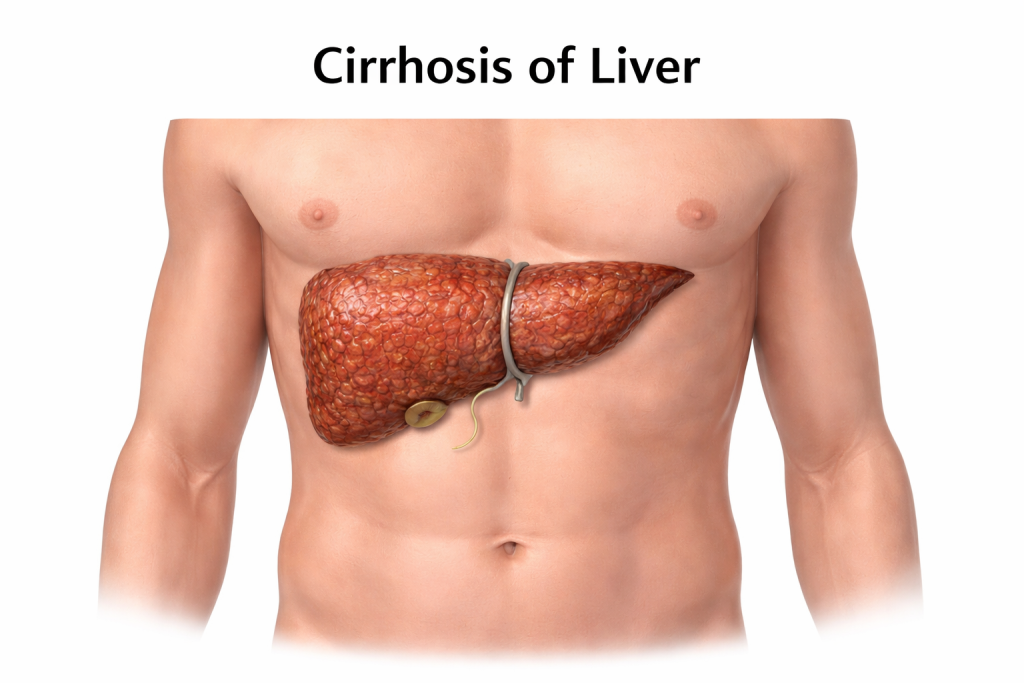
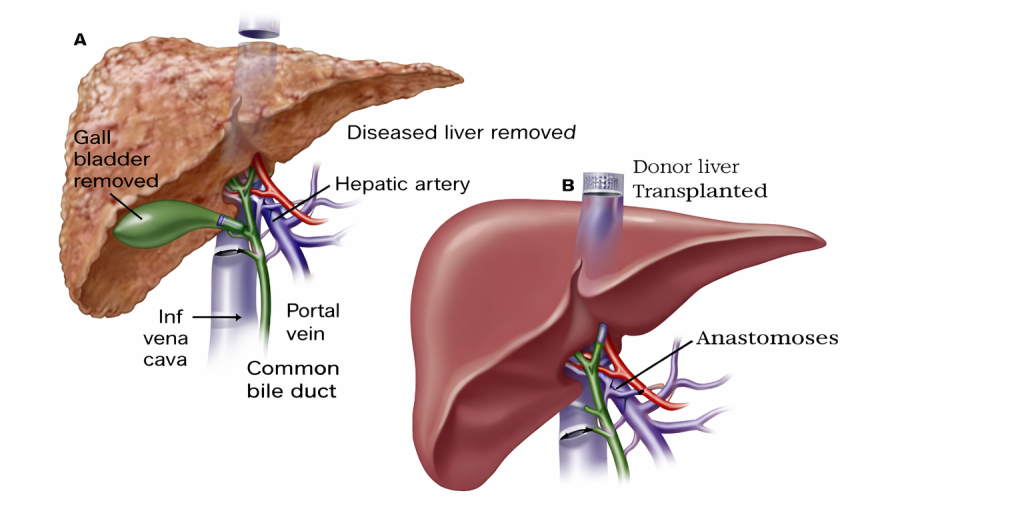
The liver is the largest internal organ in your body. An average adult liver weighs approximately 1.2 – 1.7 kg’s. The liver is located in the right side of the abdomen just beneath the diaphragm and behind the lower ribs. The liver has a right and left lobe. The main blood vessels of the liver are the hepatic and portal veins, inferiorvenacava and hepatic artery.
FUNCTIONS OF LIVER
The metabolism of carbohydrates and basic proteins.
Detoxification (cleaning) of harmful substances from the body.
Production of bile and proteins.
Filtering blood to remove bacteria and other particles.
FUNCTIONS OF LIVER
Non alcoholic fatty liver
Viral hepatitis
Hepatitis A, B & C
Alcoholic cirrhosis
Liver cancer – Hepatocellular Carcinoma.
Autoimmune hepatitis
Primary Biliary Cirrhosis
Primary Sclerosing Cholangitis
Hemochromatosis
Alpha – 1 Antitrypsin Deficiency
Wilsons disease
Steatohepatitis
The signs and symptoms of liver disease
include:
Jaundice (yellowing of eyes and skin)
Pruritus (severe itching)
Dark urine and clay colored stools
Mental confusion, forgetfulness, coma.
Varices (enlarged vessels in throat & stomach)
Vomiting of blood and blood in stools
Easy bruising and tendency to bleed
Ascites (abnormal buildup of fluid within the abdomen)
Muscle Wasting and Fatigue
TRANSPLANT CANDIDACY
Full liver transplanted during cadaver liver transplant
Patients with End Stage Liver Disease will be given a score called MELD calculated with few blood test results (Bilirubin, INR & Creatinine). MELD score determines the severity of liver disease and helps to select the patients who are in need for liver transplant.
The presence of end stage liver disease, which cannot be cured by other medical treatments
No active infections including HIV infection.
At least 3 months abstinence from alcohol.
No active cancer, with the exception of some liver tumors
PRE - LIVER TRANSPLANTATION
WORK UP
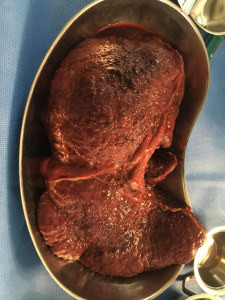
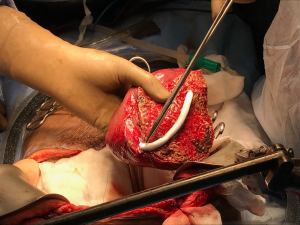
Cirrhotic liver taken out during liver transplant
The evaluation can be done either as an outpatient or inpatient basis. During the evaluation you will have appointments with many specialists in addition to the members of the liver transplant team. The pre-transplant tests, as well as giving a clear picture of your overall health status, helps in identifying potential problems before they occur. This increases the likelihood of success.
Blood Test &; Chest X Ray
Ultrasound with Doppler of abdomen
CT Scan /MRI Scan
Echocardiogram
Pulmonary function test
Endoscopy /Colonoscopy
Liver biopsy
Gastroenterology referral for liver transplant
Meets criteria for liver transplant (As above)
Liver transplant evaluation
Medically fits criteria for transplant
Deceased Donor Live Donor
WAITING LIST FOR LIVER
TRANSPLANT
Patients are listed through our Hospital on the Tamilnadu state transplant Registry which is governed by TRANSTAN (Transplant Authority of Tamil Nadu Organ) which is a government organization. All centers in Tamilnadu including our Hospital will receive liver in rotation. Patients are listed by ABO blood type.
WHILE ON WAITING LIST
If possible live close to the Hospital.
You will be followed up by transplant team once a month until you receives a transplant.
Please notify transplant coordinators if you are leaving town and if there is a change in your health status.
You may be called any time to come in for a transplant.
You must be able to arrive at the transplant center within 6 hours from the time you are called in for the transplant.
LIVER TRANSPLANT SURGERY
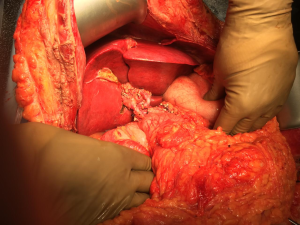
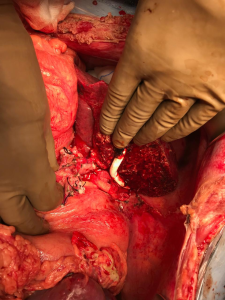
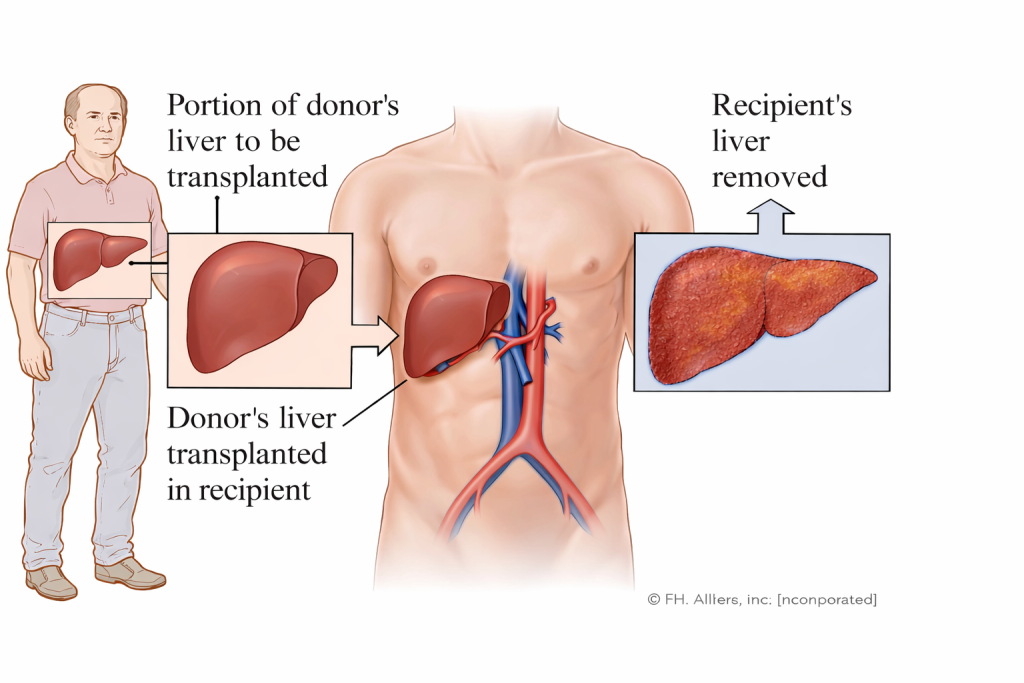
Liver transplant surgery involves removal of your entire diseased liver and replacing it with the new liver from either deceased donor or live donor.
Living donor liver after transplantation
POST OPERATIVE COURSE
After Liver transplantation you will have to stay in the hospital for about 2 to 3 weeks and another 2 to 3 weeks close to the hospital so that you can be followed up regularly.
MEDICATION
In order to prevent rejection the doctors will prescribe medications that you will take every day for the rest of your life. These medications are given to keep you alive.
LIVER TRANSPLANT OUTCOME
More than 95% of patients survive for several years following liver transplant.
A living donor liver transplant involves removing a portion of a healthy person’s liver and transplanting it into someone with liver failure. Human liver has the unique ability to regenerate in both the donor and recipient within weeks. It offers a faster, often better-outcome alternative to waiting for a deceased donor liver transplant.
Who can be a Liver Donor?
Small portion of liver from Living donor
Donor Must be 18–54 years old in excellent physical/mental health, have a compatible blood type, and pass rigorous medical evaluations, including checks for BMI<32 and no significant organ disease.
How is donor operation done: A small portion of the liver is removed from the donor's liver (40–60%) either by Open or Robotic technique and transplanted it into the recipient, whose diseased liver is entirely removed. The surgery takes about 5–7 hours.
How will be the Donor Recovery : Donor will be in the ICU for 2 days and will be the room for another 3-4 days. They will be able to return to normal life within 3 to 4weeks. The remaining liver in the donor and the transplanted segment in the recipient grow back to near-normal volume within 4–8 weeks.
What are the Benefits & Risks?
Benefits include faster recovery for the recipient and reduced waiting time. Risks to the donor include bleeding, infection, pain, or rare complications, necessitating thorough counseling and evaluation.
The procedure is highly planned to prioritize donor safety and provides a crucial lifeline for patients needing a transplant.