END STAGE RENAL DISEASE (ESRD)/ KIDNEY FAILURE
Dialysis and kidney transplantation are the only treatments for End Stage Renal Disease/Kidney Failure
- Dialysis is the term for several different methods of artificially filtering the blood. People who require dialysis are kept alive but give up some degree of freedom due to their dialysis schedule, fragile health, or both.
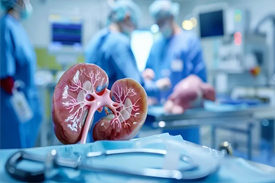
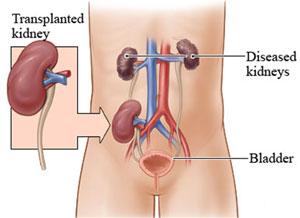
- Kidney transplantation means replacement of the failed kidneys with a working kidney from another person, called a donor.
FUNCTIONS OF KIDNEY:
- The kidneys’ functions as a filter for blood. All the blood in our body passes through the kidneys several times a day. The removed waste products are excreted as urine.
- The kidneys control the body’s fluid balance and regulates the balance of electrolytes.
CAUSES OF KIDNEY FAILURE
- Diabetes mellitus
- Hypertension
- Polycystic kidney disease
- Overuse of drugs
- Glomerulonephritis
- Infectious diseases
Diabetes and hypertension together account for more than 45 % of all kidney failure patients.
KIDNEY TRANSPLANTATION:
Kidney Transplantation is the most definitive and cost-effective treatment for patients with kidney failure and on dialysis. It is estimated that in India every year over 152,000 people are diagnosed to have renal failure needing Kidney transplantation.
TYPES OF KIDNEY TRANSPLANT
DECEASED DONOR
In deceased donor transplant or Cadaveric kidney transplant, the patient receives a healthy kidney from a brain dead patient. In this case the patient needs to be listed in the Transplant Authority of Tamil Nadu (TRANSTAN) and be on the waiting list until he receives a healthy organ. Organs are allocated by the government based on the waiting time and blood group compatibility.
LIVING DONOR
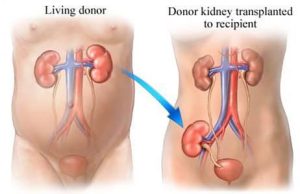 In living donor transplant the patient receive a healthy kidney from a healthy individual who is consented to donate one kidney. The donor surgery is performed with laparoscopic assistance. There is no waiting period in this type of transplant. Several tests will be done to make sure the donor is medically fit to donate and the organ is suitable for the recipient. By law only relatives can donate kidneys (i.e Mother, Father, son, daughter and spouse).
LAPAROSCOPIC DONOR NEPHRECTOMY
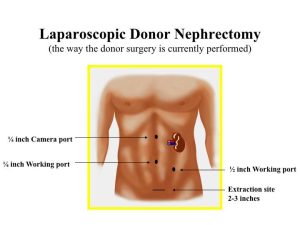 In contrast, in a laparoscopic donor nephrectomy, tiny incisions are used and the kidney is removed using a scope or camera and special miniaturized surgical instruments. The procedure is similar to one used to remove a gall bladder. This minimally invasive procedure has a shorter recovery period and the complication rate is very low. In addition, the quality and function of the transplanted kidneys are excellent.
Donor nephrectomy is the removal of kidney from a living donor to be transplanted in the recipient. Traditionally they are done by an “open” technique requiring a large incision. This so-called “open” procedure was associated with significant pain and a substantial recovery time for the donor.
BENEFITS OF KIDNEY TRANSPLANT
- Patient will be free from dialysis.
- Maintain a good quality of life.
COURSE IN THE HOSPITAL
Recipients stay in the hospital for approximately 10 to 14 da depending on the kidney function and general recovery. Donors are usually discharged from the hospital by 4 or 5 days.
KIDNEY TRANSPLANT OUTCOME
Kidney transplant results have improved over the last twenty years in India. Overall patient survival with graft function was 97, 91, and 86% at 1, 5, and 10 years, respectively. More than 85% of the patients will have a functioning kidney at 10 years.