
dr_swaminathan_sambandam

Laparoscopic Donor Nephrectomy

LAPAROSCOPIC DONOR NEPHRECTOMY

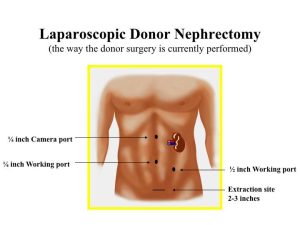
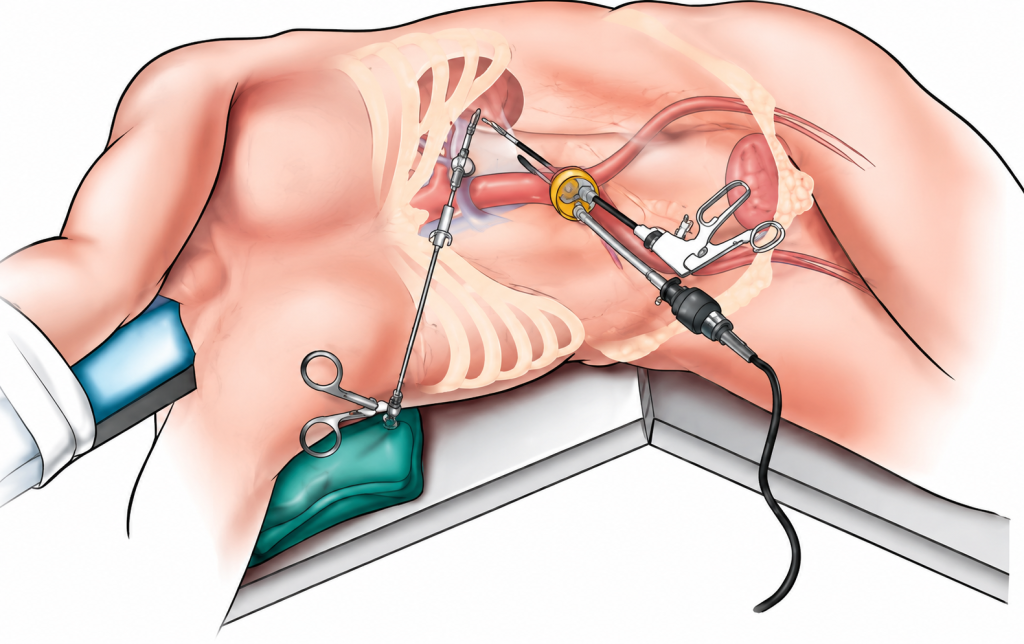
In contrast, in a laparoscopic donor nephrectomy, tiny incisions are used and the kidney is removed using a scope or camera and special miniaturized surgical instruments. The procedure is similar to one used to remove a gall bladder. This minimally invasive procedure has a shorter recovery period and the complication rate is very low. In addition, the quality and function of the transplanted kidneys are excellent.

Donor nephrectomy is the removal of kidney from a living donor to be transplanted in the recipient. Traditionally they are done by an “open” technique requiring a large incision. This so-called “open” procedure was associated with significant pain and a substantial recovery time for the donor.
Advantages and Disadvantages of Laparoscopic Donor Nephrectomy

✓ Advantages

  • Less postoperative pain
  • Smaller incisions and minimal scarring
  • Shorter hospital stay
  • Faster recovery and return to work
  • Less blood loss during surgery
  • Better cosmetic results
  • High donor satisfaction

✗ Disadvantages

  • Longer operative time
  • Technically complex procedure
  • Requires experienced surgeons
  • Risk of conversion to open surgery
  • Possible injury to nearby organs
  • Slightly higher equipment cost
  • Rare bleeding complications

Types of Laparoscopic Donor Nephrectomy

1. Pure Laparoscopic Donor Nephrectomy (PLDN): This technique uses small incisions, a camera, and laparoscopic instruments to remove the donor kidney. The kidney is removed through a small extraction incision.

2. Hand-Assisted Laparoscopic Donor Nephrectomy (HALDN): The surgeon inserts one hand through a special hand port while using laparoscopic instruments. This provides better control, tactile feedback, and can help in complex cases.

3. Retroperitoneoscopic Donor Nephrectomy: The kidney is approached from the back through the retroperitoneal space (behind the abdominal cavity), avoiding entry into the abdominal cavity.

4. Transperitoneal Laparoscopic Donor Nephrectomy: The surgeon accesses the kidney through the abdominal cavity. This offers a larger working space and clearer anatomical visualization.

5. Robot-Assisted Laparoscopic Donor Nephrectomy: Uses robotic technology to assist the surgeon with enhanced precision, flexibility, and 3D visualization.