Dialysis Access Surgery
Dialysis is the most common form of treatment for kidney failure. Dialysis is a way of removing the waste products from the blood stream when the kidneys cannot do that function. There are two main methods of dialysis: HAEMODIALYSIS or PERITONEAL DIALYSIS.
1. Haemodialysis and AV Fistulas:
Hemodialysis is the process of circulating the blood outside of the body, through a filter system (Dialysis machine), which removes toxins and purifies the blood. Some patients require long term dialysis for which an AV fistula has to be created. Two needles are inserted into the patient's bloodstream to allow this process to occur. Hemodialysis is normally performed two or three times a week and the purpose of AV fistula is to provide reliable sites where the bloodstream can be easily accessed each time. An arteriovenous fistula is created by making a connection between an artery (which carries blood away from the heart) and a vein (which carries blood back to the heart). This artificial connection allows the vein to become larger and for the walls of the vein to thicken, a process termed maturation. A mature fistula makes it easier for the vein to be punctured repeatedly for dialysis. Maturation typically takes six to eight weeks to occur, but in rare cases, can take up to 3 months.
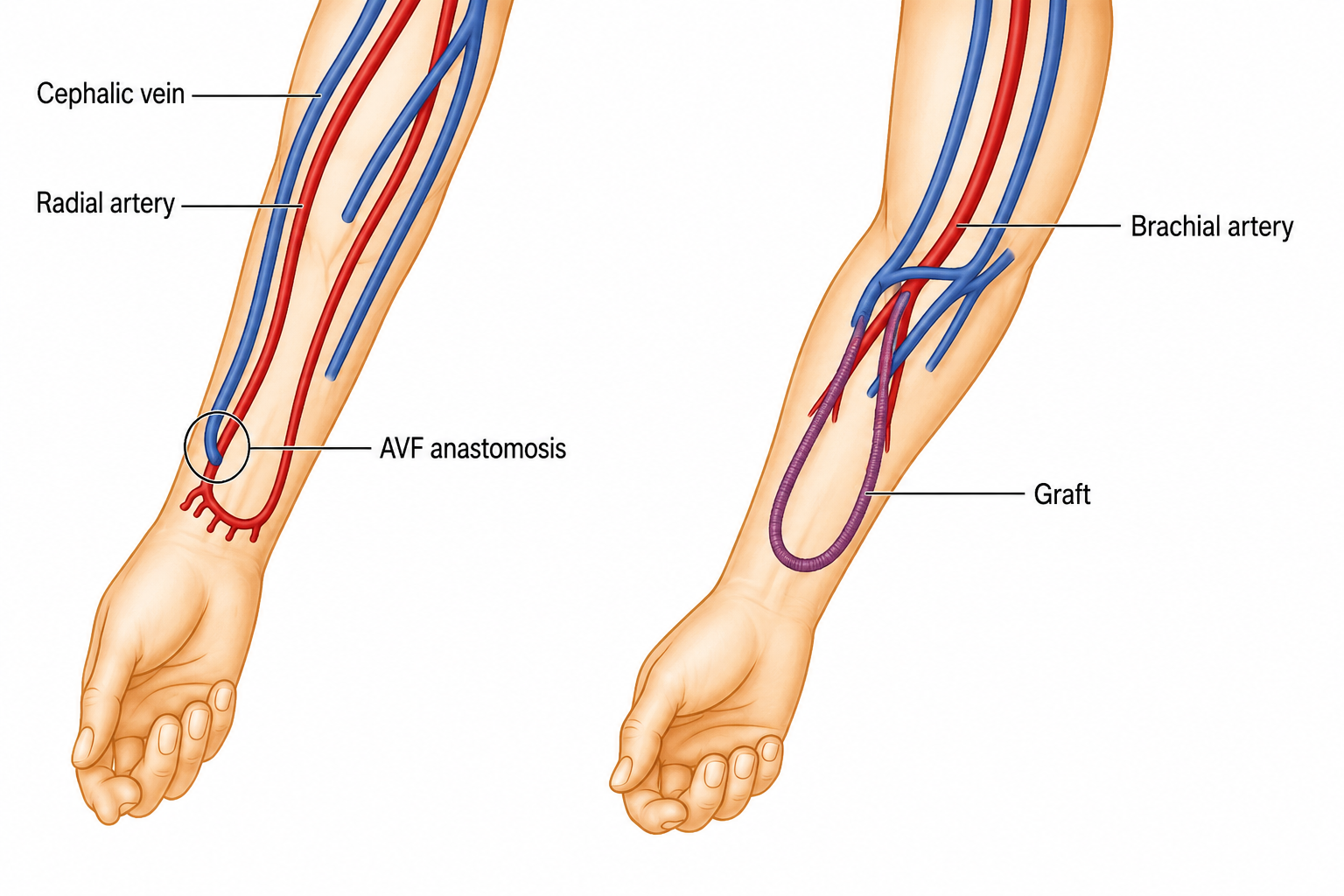
An arteriovenous graft (synthetic tube) is sometimes used instead of sewing an artery to a vein if the vein is determined to be too small. It is surgically placed below the surface of the skin to connect an artery to a vein. After placement of the graft, there is still a required amount of weeks to heal before the graft can be accessed for hemodialysis.
Peritoneal Dialysis and Laparoscopic Peritoneal Dialysis catheter insertion
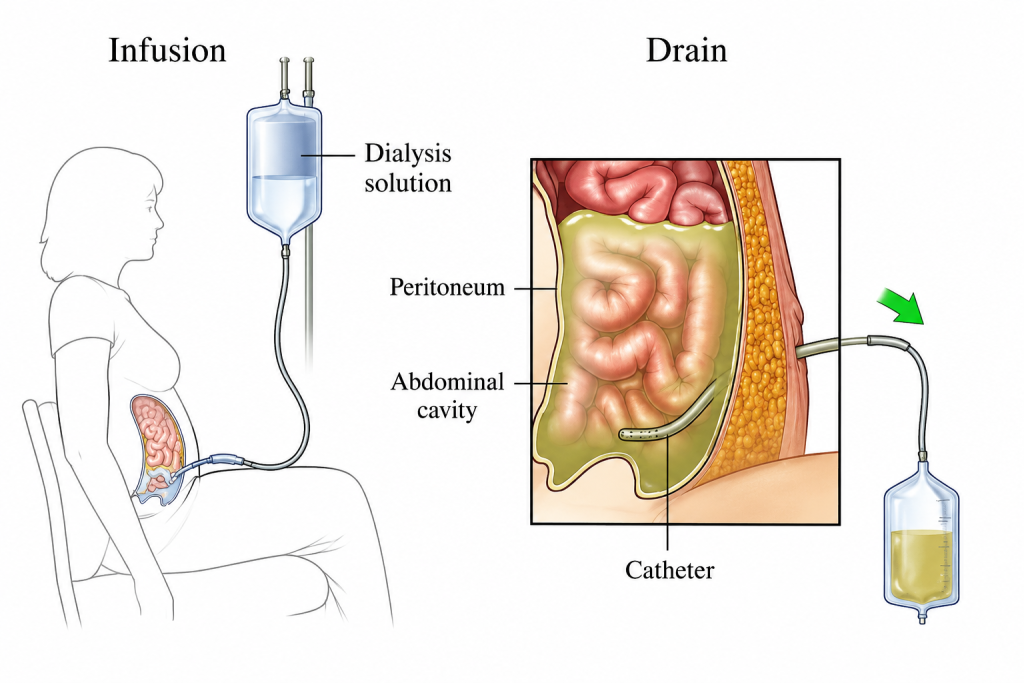
Peritoneal dialysis is a treatment in which a special dialysis fluid bathes the space in the abdomen and removes toxins, water and salts from the body. Since the treatment must occur every day, there must be consistent and easy access to the abdominal cavity. This can be achieved with insertion of a Peritoneal Dialysis(PD) catheter by laparoscopic or open surgery..
When done by laparoscopic technique, using two small cuts a plastic tube is inserted into the abdomen.
PD catheter placement is considered a minor operation, and complications are rare. It often requires general anesthesia, but the whole procedure takes less than one hour of surgical time. In general, it is best to have the catheter placed at least two weeks before actually beginning dialysis.