
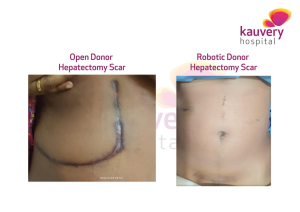
 Robotic donor hepatectomy (RDH) is a state-of-the-art, minimally invasive approach for liver transplantation, utilizing robotic systems to remove part of a healthy donor’s liver. It enhances precision, dexterity, and 3D visualization, offering benefits such as reduced blood loss, faster recovery, and decreased pain compared to open surgery.
Key Aspects of Robotic Donor Hepatectomy
- Procedure: A surgeon-controlled robotic system (e.g., Da Vinci) is used to meticulously dissect blood vessels and bile ducts through small incisions, typically including high-definition magnification.
- Technique Highlights: Key steps include hilar dissection, right/left lobe mobilization, parenchymal transection, and Bile Duct division (often using ICG fluorescent dye for imaging).
- Major Advantages:
- Reduced Morbidity: Significantly reduces abdominal wall trauma, resulting in less pain and better cosmetic outcomes (fewer scars).
- Shorter Recovery: Donors often experience faster recovery times and an earlier return to normal activities compared to open procedures.
- Precision and Safety: Enhanced instrument articulation allows for delicate maneuvering and improved safety for the donor.
Comparison to Other Methods
Studies suggest that robotic donor hepatectomy offers similar, if not better, outcomes to open donor hepatectomy (ODH) and conventional laparoscopic donor hepatectomy (CLDH), specifically showing reduced analgesic needs and smaller incision-related risks. The technology is particularly promising for complex procedures such as right lobe hepatectomy.