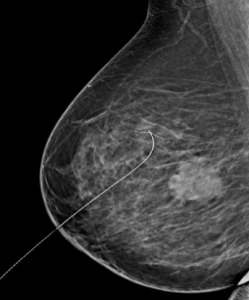
Wire Localization

Wire Localization:
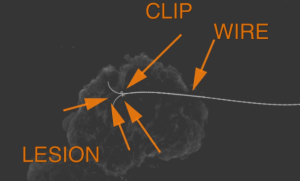
Wire localization also called needle localization or hook-wire localization is a procedure done before breast surgery to help the surgeon precisely find an abnormal area that cannot be felt on
examination, such as:
- Microcalcifications
- Small masses /Chemo responded masses with significantly smaller in size
- Architectural distortions
- Areas seen only on mammogram, ultrasound, or MRI
It is not a biopsy itself—it’s a guidance step for surgery.
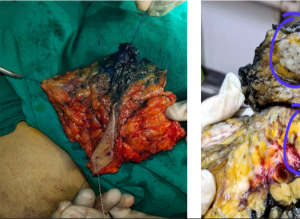
How Wire localization is done ?
The Breast Radiologist uses either:
- Mammogram (stereotactic guidance)
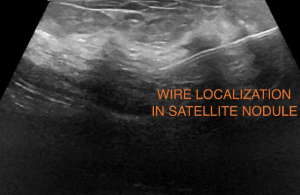
- Ultrasound
- MRI
to locate the exact spot in the breast.
2. Local anesthesia
The skin and deeper tissue are numbed with a local anesthetic. You won’t feel sharp pain—just pressure.
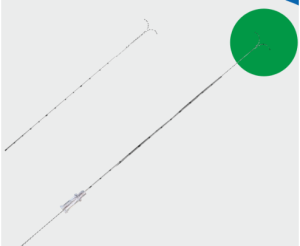
3. Insertion of the thin wire
- A very thin hollow needle is inserted into the breast toward the
abnormal area. - Once the tip reaches the lesion, a thin wire with a tiny hook at the end is released.
- The hook anchors into the tissue so it stays in place.
4. Needle removal
The needle is removed, leaving only the small wire protruding from the skin.The wire guides the surgeon later.
5. Securing the wire
The wire is taped to your skin and covered with a protective dressing.
6. Surgery happens soon after
You are sent directly (or shortly after) to the operating room. The surgeon follows the wire to remove the exact area of concern.
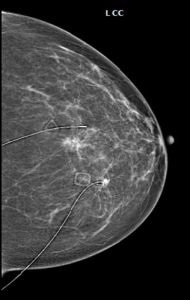
Why is wire localization done?
Because some breast abnormalities cannot be seen or felt during
surgery.
The wire shows the surgeon exactly where to operate, helping remove
the right area with clean margins.
How long does the procedure take?
Usually 5-15 minutes.
Is wire localization painful?
It is painless. Most people feel pressure , tugging or sllight discomfort.
What are the Risks ?
- Slight bleeding
- Bruising
- Wire shifting (very uncommon—precautions prevent this)